
Introduction
"I want to photograph the sunrise in Hawaii tomorrow." If this thought crossed your mind, how would you check the time?
If you search "Hawaii sunrise" on your smartphone, you'll get an answer instantly. But have you ever stopped to wonder why the sunrise time in Hawaii is so different from Tokyo or New York? Or why the sun doesn't set for months in the Nordic summers?
As I began researching sunrise and sunset times around the world for my photography, I became fascinated by the depth of solar mechanics. In Singapore, right on the equator, the sun rises at almost the same time all year round. Meanwhile, in Finland, the sun refuses to set for two months during summer. We all live on the same planet, yet our relationship with the sun varies drastically depending on where we stand.
In this article, we will delve into the "why" behind sunrise and sunset mechanics and provide practical knowledge useful for your next trip or photo shoot.
1. Why Sunrise and Sunset Times Vary by Location
1-1. Day and Night Created by Earth's Rotation
The cycle of "morning comes, then night falls" that we experience daily is created by the Earth rotating once approximately every 24 hours.
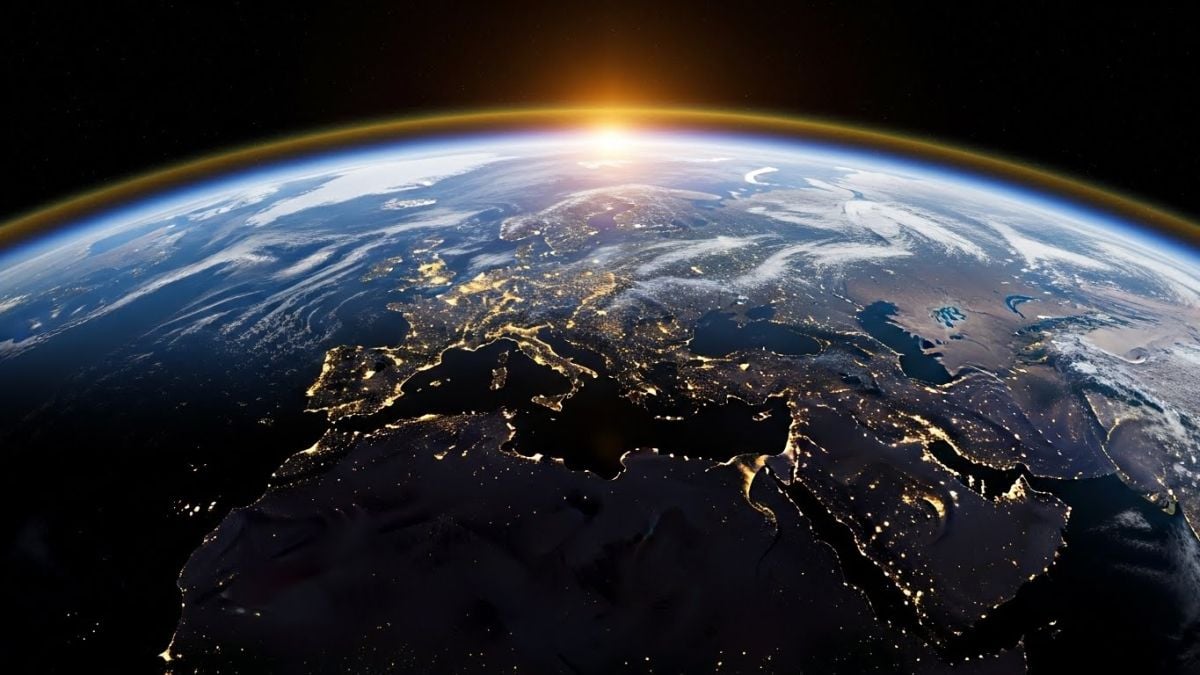
If you look at the Earth from the side, half is always illuminated by the sun (day), and the other half is in shadow (night). As the Earth spins, when your location turns toward the sun, it becomes morning; when it turns away, it becomes night. "Sunrise" is the moment the sun peeks over the horizon, and "sunset" is the moment it sinks below it.
This might be common knowledge. But why do sunrise times differ so much depending on the location?
1-2. The Dramatic Impact of Latitude
"Latitude" has the most significant impact on sunrise and sunset times.
Near the equator, the sun rises and sets almost perpendicularly to the horizon. Therefore, the time from sunrise to sunset remains stable at about 12 hours throughout the year. A friend living in Singapore (1° North) often says, "There is no sense of seasons here," which is true because the sun's movement barely changes.
On the other hand, in high-latitude regions, the sun moves diagonally. In Stockholm, Sweden (59° North), daylight lasts over 18 hours on the summer solstice, shrinking to just about 6 hours on the winter solstice. Within the same year, daylight hours fluctuate by a factor of three.
1-3. Axial Tilt and the Seasons
"But why do daylight hours change between summer and winter?"
The answer lies in the Earth's axis, which is tilted about 23.4 degrees relative to its orbital plane. This tilt is known as the "obliquity of the ecliptic," and according to NASA, it is precisely 23.44 degrees (Source: NASA Earth Fact Sheet).
Around June (Summer Solstice), when the Northern Hemisphere tilts toward the sun, daylight hours are longest there. Conversely, around December (Winter Solstice), the Northern Hemisphere tilts away, resulting in the shortest daylight hours. In the Southern Hemisphere, this is reversed: December is summer, and June is winter.
For those of us in the Northern Hemisphere, the sight of people having a Christmas beach barbecue in Australia might seem surreal, but once you understand the sun's movement, it makes perfect sense.
2. Where Does the Sun Rise Earliest and Set Latest?
2-1. The First Place to Welcome the Morning
Where in the world does the new day begin first? The answer is an intriguing mix of geography and politics.
The Line Islands of the Republic of Kiribati use the UTC+14 time zone, the furthest east in the world, making them known as the first place to see the date change. In 1995, the Kiribati government adjusted the time zone for the Line Islands to eliminate the inconvenience of the country straddling the International Date Line (where it would be two different dates within the same country).
Travelers who have visited say the sense of achievement in "seeing the world's first sunrise" is exceptional. However, access to the Line Islands is limited and not easy.
More realistic options include Tonga (UTC+13) and New Zealand's Chatham Islands (UTC+12:45). New Zealand, in particular, has well-developed tourism infrastructure, and "First Sunrise of the World" tours are popular.
2-2. The Place Where "Yesterday" Lasts the Longest
Conversely, the places where the day ends last on Earth are American Samoa and Baker Island. Both use UTC-12.
Interestingly, the Line Islands (Kiribati) and American Samoa are geographically only a few hundred kilometers apart. Yet, across the International Date Line, there is a staggering 26-hour time difference.
This means when it is 10:00 AM on Monday morning in Kiribati, it is still 8:00 AM on Sunday morning in nearby American Samoa. This fact illustrates that time zones are decided by political and economic reasons, not just pure geography.
2-3. The Mystery of China: One Country, One Time
In countries with vast landmasses, sunrise times can vary greatly even within the same nation. The most extreme example is China.
China spans about 5,000 km from east to west but uses only a single time zone, "Beijing Time (UTC+8)," for the entire country. Geographically, this landmass covers what would naturally be five time zones.
As a result, in the eastern province of Heilongjiang, the sun rises as early as 3:00 AM in summer. Meanwhile, in the western region of Xinjiang, it can still be dark outside even past 9:00 AM "Beijing Time." Locals in the west often use an unofficial "Xinjiang Time" (Beijing Time minus 2 hours) for their daily lives.
| Country | Time Zones | Width (East-West) | Notes |
|---|---|---|---|
| Russia | 11 | Approx. 9,000km | Most time zones in the world |
| USA (Mainland) | 4 | Approx. 4,500km | Eastern, Central, Mountain, Pacific |
| China | 1 | Approx. 5,000km | Unified for political reasons |
| India | 1 | Approx. 3,000km | Uses UTC+5:30 (30-min offset) |
*Scroll horizontally to view the table
3. The Midnight Sun and Polar Night
3-1. "Midnight Sun": When the Sun Never Sets
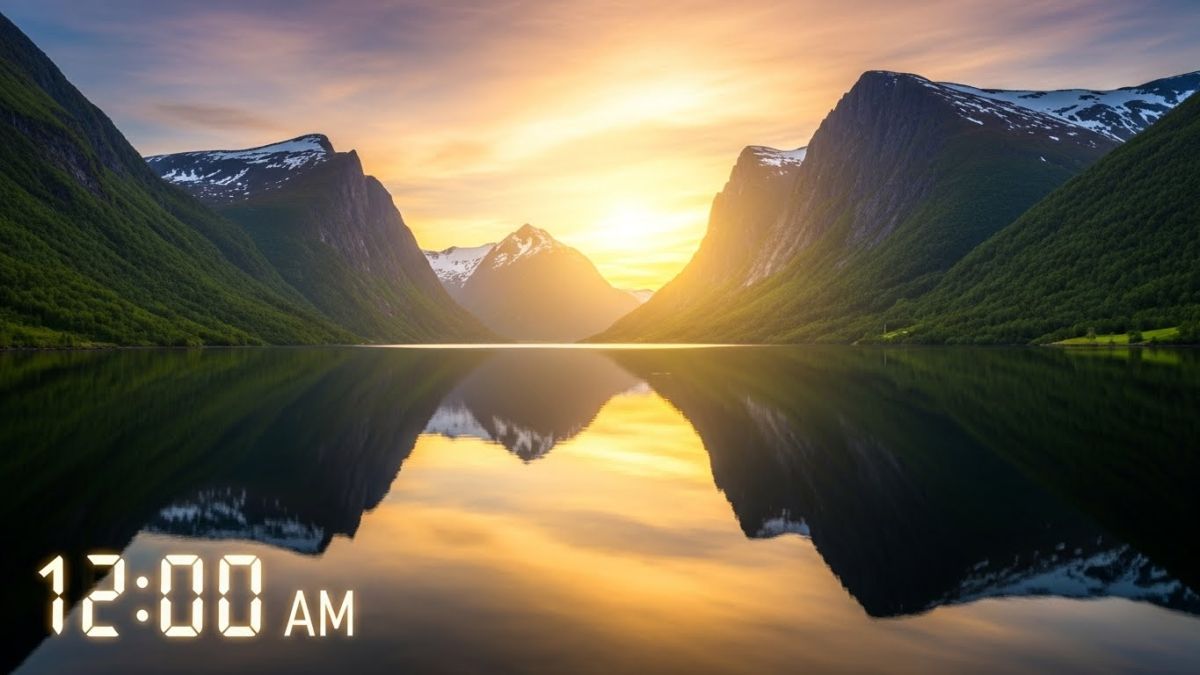
If you've traveled to the Arctic Circle, you may have experienced being unable to sleep because it was bright outside at 2:00 AM. This is the Midnight Sun.
The Midnight Sun is a phenomenon where the sun does not set below the horizon even at midnight. It occurs around the summer solstice north of the Arctic Circle (66.5° N) and south of the Antarctic Circle (66.5° S).
Why 66.5 degrees? It relates to the Earth's axial tilt (23.4 degrees). Subtracting 23.4 from 90 degrees gives you 66.6. Essentially, due to the tilt, the boundary where the sun doesn't set for 24 hours on the summer solstice falls around latitude 66.5 degrees.
An acquaintance living in Tromsø, Norway, described the Midnight Sun season as "a sleepless but happy season." Children playing soccer at midnight, families enjoying barbecues at 3:00 AM. People in the Nordics try to enjoy their short summer to the fullest.
| Country | City | Latitude | Midnight Sun Period | Features |
|---|---|---|---|---|
| Norway | Tromsø | 69.6° N | May 20 – July 22 | "Gateway to the Arctic", good infrastructure |
| Sweden | Kiruna | 67.8° N | May 28 – July 15 | Famous for the Ice Hotel |
| Finland | Rovaniemi | 66.5° N | June 6 – July 7 | Home of Santa Claus Village |
| Iceland | Reykjavik | 64.1° N | Briefly bright after sunset in June | Just outside Arctic Circle but very high latitude |
| USA | Fairbanks | 64.8° N | Early June – Early July | Interior Alaska |
※ Dates vary slightly by year.
3-2. "Polar Night": A World Without Sunrise
The opposite of the Midnight Sun is the Polar Night. This is when the sun does not rise above the horizon all day.
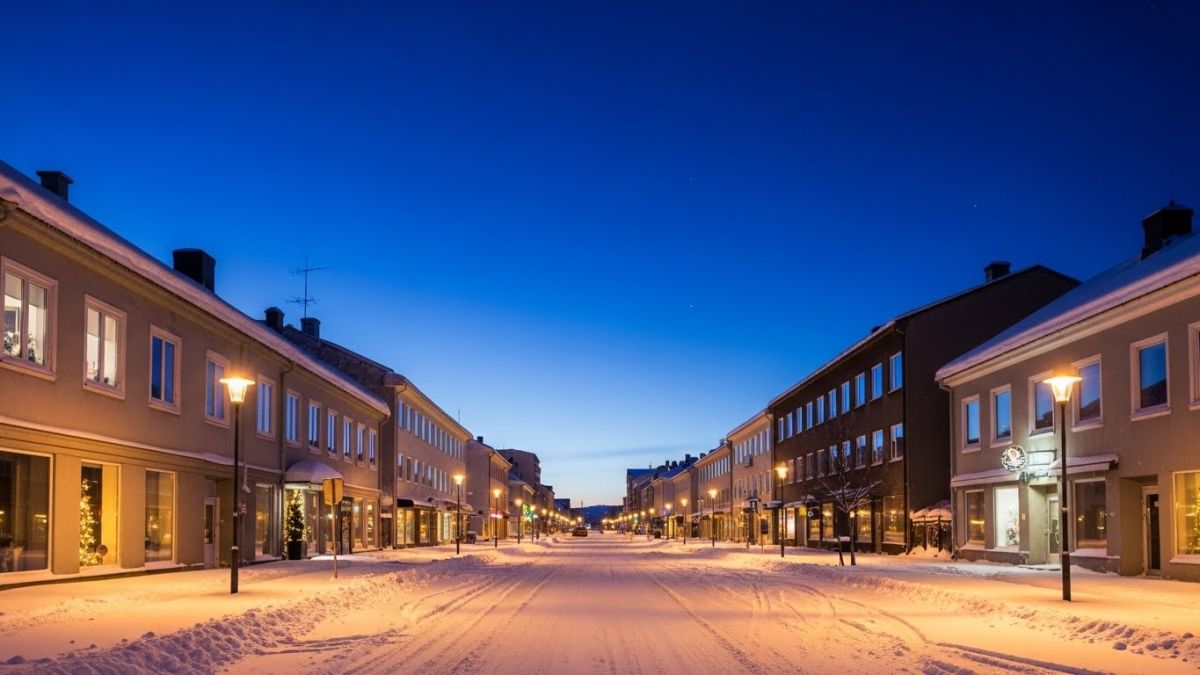
Hearing "Polar Night" might make you imagine pitch darkness, but that's not entirely accurate. During the hours when the sun is just below the horizon, the sky is dyed in a mystical faint blue light known as the Blue Hour. Photographers in Norway call this Polar Night Blue Hour "the most beautiful light of the year."
However, the mental impact cannot be ignored. In northern Norway, more people report symptoms of depression during winter, so light therapy (treatment involving exposure to strong artificial light) is commonly practiced.
3-3. The Gift of Polar Night
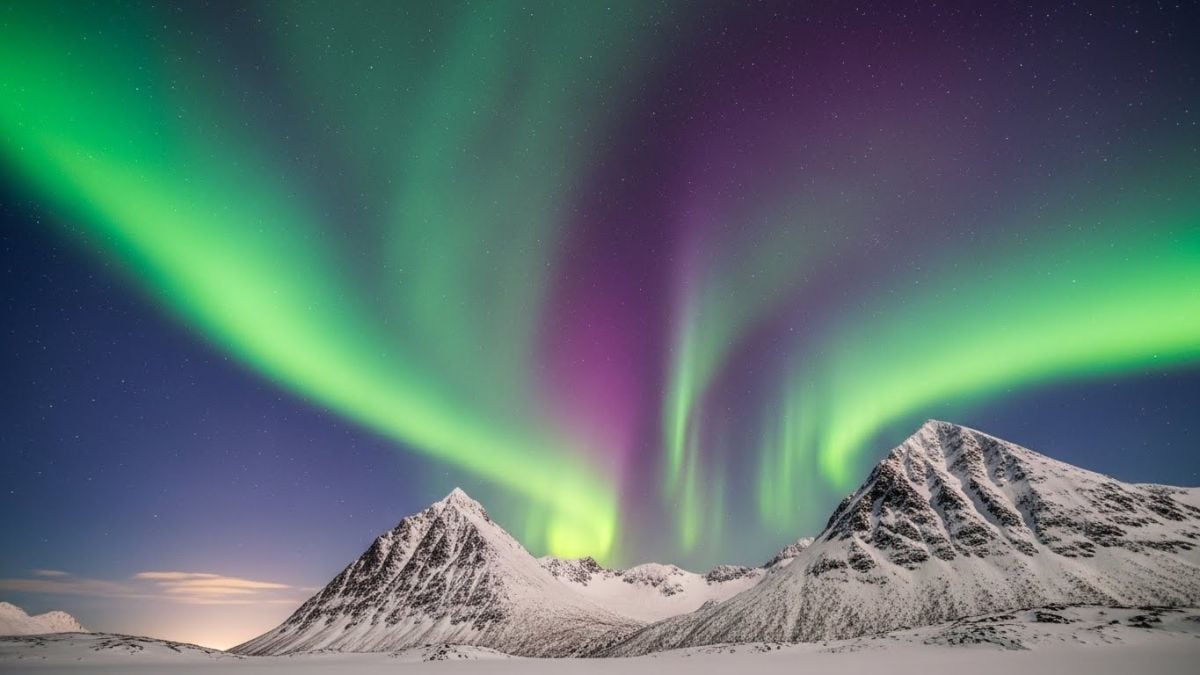
Yet, the Polar Night brings an irreplaceable gift: the Aurora Borealis (Northern Lights).
Since the sun doesn't rise, the sky remains dark for long periods, drastically increasing the chances of observing auroras. In Tromsø, from December to January, you can sometimes see auroras even during the "daytime" hours (though it is dim).
Whether you perceive the Polar Night as a "dark and lonely season" or a "special season to meet the Aurora" depends on your perspective. People living in the Arctic seem to enjoy winter with the latter mindset.
4. Global Comparison of Sunshine Duration
4-1. The Sunniest Places on Earth
Where is the "sunniest place on Earth"?
The answer is Yuma, Arizona, USA. According to World Meteorological Organization (WMO) data, Yuma's annual sunshine duration is approximately 4,015 hours. That averages out to about 11 hours of sun every single day.
The reason Yuma is called the "Sunniest City on Earth" lies in its desert climate. Annual rainfall is only about 80mm (3 inches), and clear skies occur over 90% of the time. Because there are almost no clouds, the sun is out from sunrise to sunset.
Following Yuma are Aswan, Egypt (approx. 3,800 hours) and Alice Springs, Australia (approx. 3,500 hours). All are cities with dry desert climates.
4-2. Places Where the Sun is Precious
On the other hand, which cities have the least sunshine?
London, UK gets about 1,400 hours annually, which is roughly a third of Yuma. It has many cloudy or foggy days, so the stereotype that "British people always talk about the weather" might be true in a sense.
Going further north, Tromsø, Norway has about 1,000 hours annually. However, this is largely due to the Polar Night. In summer, thanks to the Midnight Sun, the sun stays out for 24 hours. While the annual total looks low, the summer sunshine intensity overwhelms other regions.
Annual Sunshine Hours in Major Cities
Source: World Meteorological Organization (WMO)
4-3. Stable Life on the Equator
Cities right on the equator have a unique rhythm.
In Singapore or Quito (Ecuador), sunrise is around 6:00–7:00 AM and sunset around 6:00–7:00 PM throughout the year. It barely changes. There is no concept of "Daylight Saving Time," so there's no need to change clocks twice a year.
A friend who moved to Singapore said, "At first, I missed the sense of seasons, but once I got used to it, it was easy. I can live with the exact same rhythm every day." The lack of fluctuation in daylight hours seems to contribute to a stable lifestyle.
5. 5 Breathtaking Sunrise & Sunset Spots
5-1. Uluru (Australia)
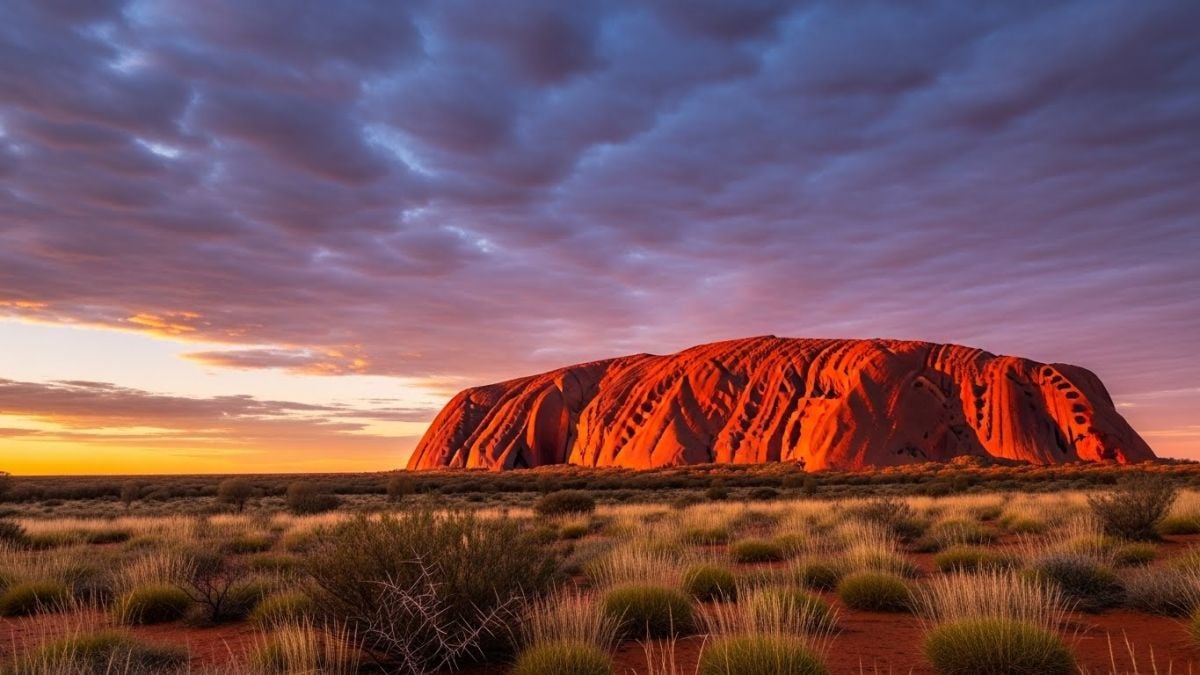
A massive monolith rising from the red earth in the center of the Australian continent. It has been a sacred site for the Anangu people for tens of thousands of years, and climbing has been prohibited since 2019.
The way the rock's surface changes color with the sunrise is beyond words. From jet black to purple, then orange, and finally deep crimson. The color shift makes the rock look like it's breathing, fitting its nickname "The Heart of the World."
Best Season for Photography: April–September (Dry season). Fewer mosquitoes and cooler temperatures at sunrise.
Recommended Spot: Talinguru Nyakunytjaku viewing area
▶ Check Sunrise/Sunset in Australia: worldsunmoon.com/en-au/sun/
5-2. Grand Canyon (USA)
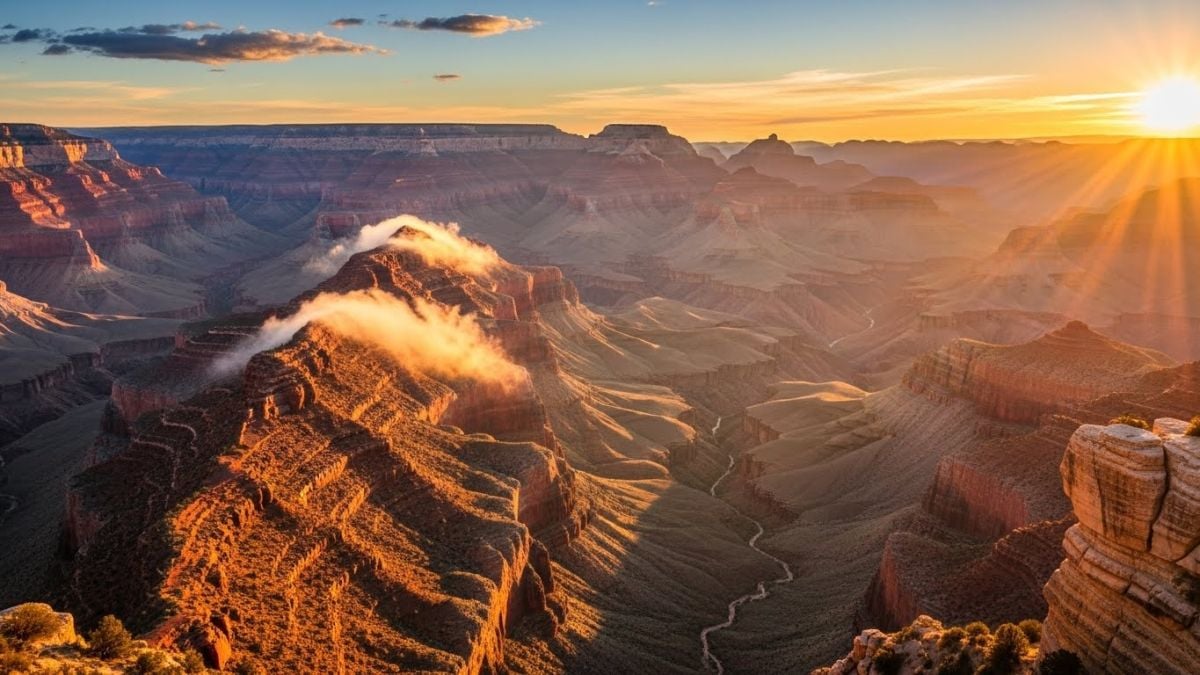
A colossal canyon 1,600m (approx. 1 mile) deep, revealing 1.7 billion years of geological layers. At sunrise, light penetrates to the canyon floor, creating a gradient of red, orange, and purple.
Many who visit the Grand Canyon agree: "Photos don't do it justice." Standing on the edge of the rim, looking down into the vast canyon stretching below your feet while waiting for the sun, is an experience you will never forget.
Best Season for Photography: Spring (March–May) and Autumn (September–November). Summer is crowded, and winter may have snow.
Recommended Spot: Mather Point, Yavapai Point (South Rim)
▶ Check Sunrise/Sunset in the USA: worldsunmoon.com/en-us/sun/
5-3. Angkor Wat (Cambodia)
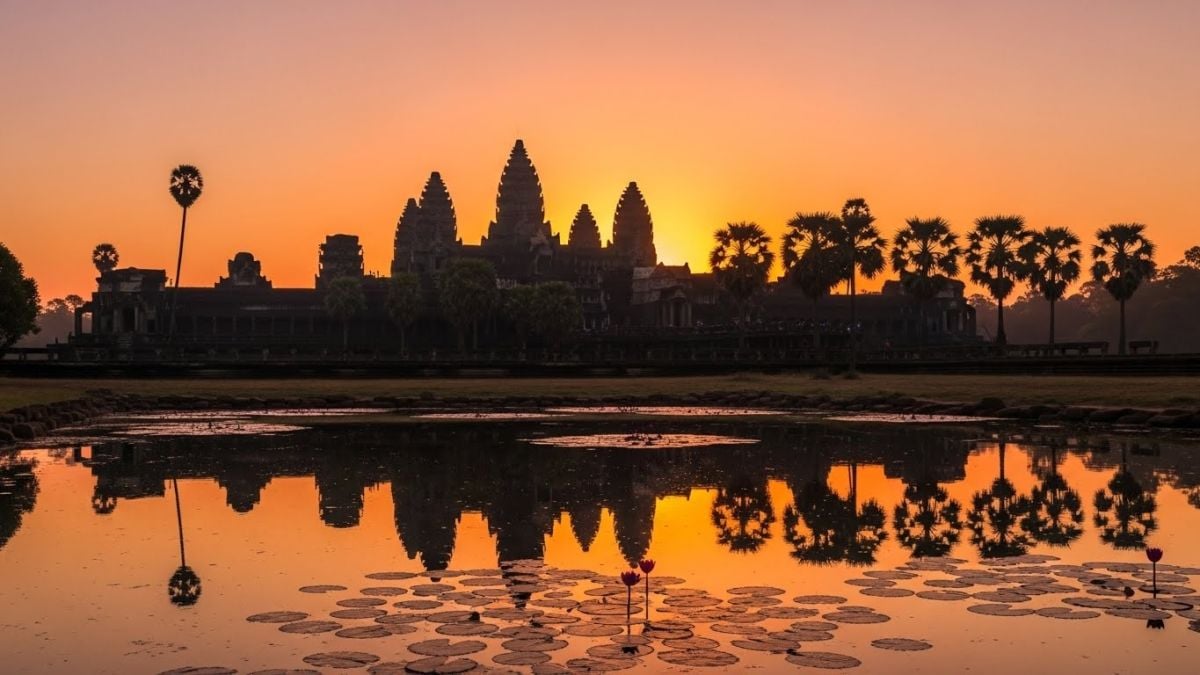
Angkor Wat, the world's largest religious monument, incorporates amazing astronomical design. On the spring and autumn equinoxes, the sun rises directly behind the central tower.
Modern astronomers marvel at how the 9th-century Khmer people achieved such precise design. The combination of the "upside-down Angkor Wat" reflected in the lotus pond and the morning glow attracts travelers from all over the world.
Best Season for Photography: November–February (Dry season). Special sunrises occur on Equinoxes.
Note: People start gathering around 5:00 AM. Positions in front of the lotus pond are highly competitive.
5-4. Santorini (Greece)
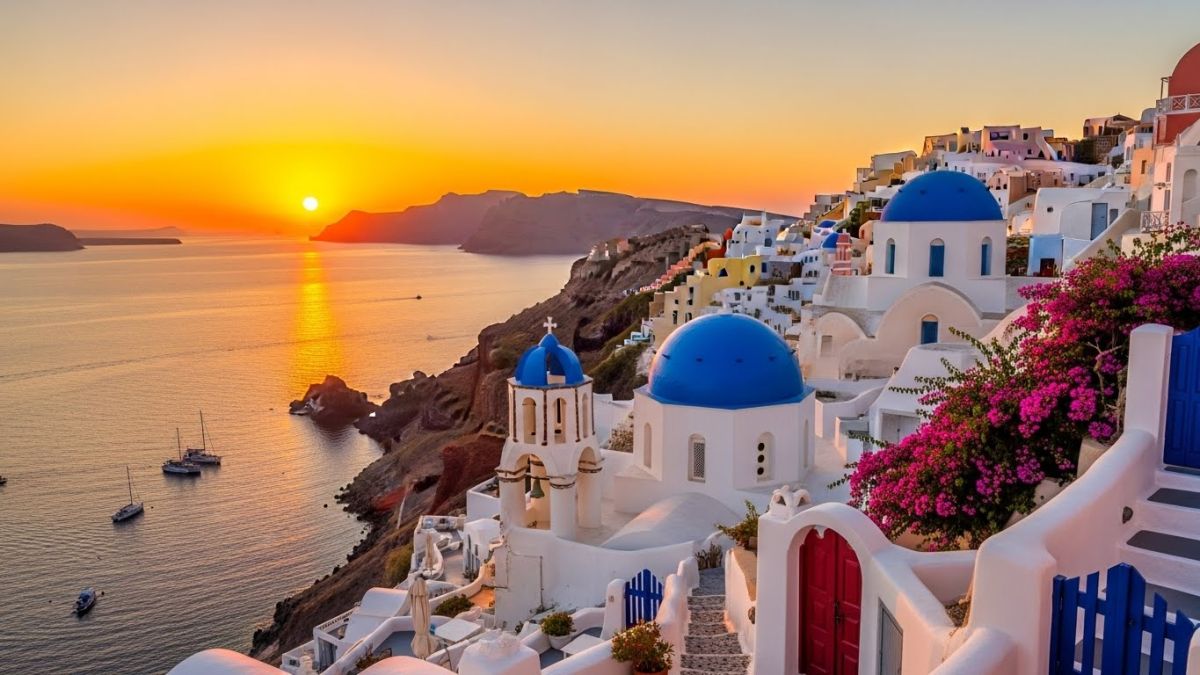
A crescent-shaped volcanic island in the Aegean Sea. The sight of white-walled houses on cliffs dyed by the setting sun is known as the "world's most beautiful sunset."
Santorini is more famous for sunset than sunrise. Every evening at the Oia Castle ruins, tourists gather from around the world to watch the sun dip into the Aegean. The moment the sun touches the horizon, applause often breaks out naturally. That sense of unity is an experience unique to Santorini.
Best Season for Photography: April–October. September–October is less crowded with stable weather.
Recommended Spot: Oia Castle ruins, cafes along the cliffs in Fira
5-5. Salar de Uyuni (Bolivia)
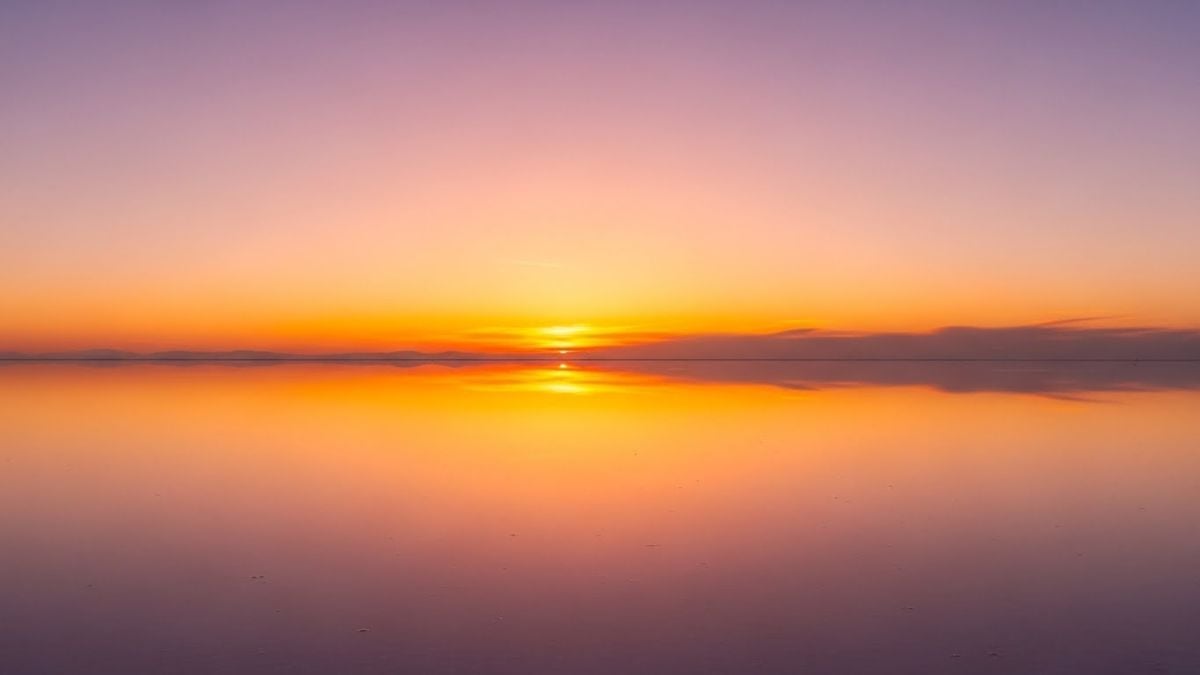
The world's largest salt flat, located at an altitude of about 3,700m (12,000 ft). During the rainy season (December–March), a thin layer of water covers the surface, creating a "Mirror of the Sky" that reflects the heavens perfectly.
Sunrise and sunset at Uyuni are unlike anywhere else. The boundary between sky and ground disappears, giving you the illusion of floating in mid-air. It is a 360-degree world of sky. Those who have experienced it say its unreal beauty is indescribable.
Best Season for Photography: February–March (Peak mirror reflection). Depends on weather as rain is needed.
Note: High altitude means risk of altitude sickness. Tours are essential.
▶ Check Sunrise/Sunset in Spanish-speaking regions: worldsunmoon.com/es/sun/
6. How to Avoid Timing Mistakes for Travel & Photography
6-1. Common Mistake: "Checking in Your Home Time Zone"
Have you ever made this mistake when trying to shoot a sunrise abroad?
You searched "Hawaii sunrise 6:30" and woke up early, but the sun didn't rise even after 7:00. You panicked and checked again, only to realize the result you saw was displayed in "your home country's time zone."
The time difference between Hawaii and New York is 5–6 hours (depending on DST). The time difference with Tokyo is 19 hours. It’s completely off.
This sounds like a joke, but it happens often. especially when searching on Google, it isn't always clear which time zone the displayed time refers to.
6-2. Choosing Reliable Sources
When checking sunrise/sunset times, pay attention to the following:
Checkpoints:
- Is the time displayed in "Local Time," "UTC," or "Your Browser's Time"?
- Is Daylight Saving Time (DST) accounted for?
- Calculation reference (City center? Airport?)
Reliable Sources:
- NOAA (National Oceanic and Atmospheric Administration) Solar Calculator
- timeanddate.com
- Official sites of national observatories or meteorological agencies
On our site, World Sun Moon, we display sunrise and sunset times in Local Time based on astronomical calculations (compliant with JPL ephemeris data). Calculation accuracy is within ±30 seconds. You can also check Civil, Nautical, and Astronomical twilight times, making it perfect for planning photography.
Common Myths and FAQs
Q: Does "East" always mean "Earlier Sunrise"?
A: Half true, half false. Since the Earth rotates from west to east, eastern locations generally welcome the morning sooner. However, actual "sunrise time" depends heavily on time zone settings. For example, Spain and Poland use the same Central European Time (CET), but geographically Spain is far to the west (same longitude as the UK). So, Madrid's sunrise looks "late" on the clock, but solar-wise, it's normal.
Q: Is it true that sunrise/sunset happens instantly at the equator?
A: Yes. Near the equator, the sun rises and sets almost vertically. The time it takes for the sun to fully cross the horizon is very short, about 2 minutes. Conversely, in high latitudes, the sun moves diagonally, so sunrise can take over 10 minutes. For photographers, this means the "Golden Hour" is very short near the equator. If you want a long Magic Hour, higher latitudes offer a longer window.
Q: Why isn't the Summer Solstice the "Earliest Sunrise of the Year"?
A: Because Earth's orbit is elliptical. In many mid-latitude regions, the earliest sunrise of the year is actually around mid-June, about a week *before* the Summer Solstice. Conversely, the latest sunset is about a week *after* the Solstice. This is due to the "Equation of Time," caused by Earth's elliptical orbit and axial tilt. Remember: "Summer Solstice = Longest Day" is true, but "Summer Solstice = Earliest Sunrise" is not precise.
Q: Can Moonrise/Moonset be calculated like the Sun?
A: The principle is the same, but the Moon is more complex. The Moon orbits Earth about every 29.5 days, so moonrise shifts by about 50 minutes each day. Also, the Moon's orbit is tilted relative to Earth's orbit, so even with the same Full Moon, its altitude varies by season. Our site calculates Moonrise/Moonset times as well. ▶ Check Moonrise & Moonset
Q: Is it really bright for 24 hours during the Midnight Sun?
A: It depends on the location. At 66.5° N (Arctic Circle boundary), the sun barely skims the horizon on the solstice. But in Tromsø (over 70° N), the sun doesn't set for two months. However, it's not "bright like noon" for 24 hours. At "night," the sun is low, creating a soft light similar to late afternoon. This means the Golden Hour lasts for hours—a dream environment for photographers.
Summary
In this article, we covered everything from the mechanics of sunrise and sunset to world-class scenic spots and practical tips for travel and photography.
Because of the Earth's rotation, revolution, and axial tilt (23.4 degrees), sunrise and sunset times vary across the globe. Near the equator, times are stable year-round, but in high latitudes, daylight hours can fluctuate by three times between summer and winter.
Welcoming the world's earliest morning in Kiribati (UTC+14), experiencing the Midnight Sun in the Nordics, or witnessing the sky and earth merge at Salar de Uyuni. In each place, the sun shows us a different face.
For your next trip or photo shoot planning, make sure to check the accurate Local Time for sunrise and sunset. At World Sun Moon, we provide high-precision (±30 seconds) solar and lunar times for cities worldwide based on JPL ephemeris data.
Your encounter with the sun is about to change.
Check Sunrise & Sunset Worldwide
- 🇺🇸 USA: worldsunmoon.com/en-us/sun/
- 🇦🇺 Australia: worldsunmoon.com/en-au/sun/
- 🇮🇳 India (English): worldsunmoon.com/en-in/sun/
- 🇯🇵 Japan: worldsunmoon.com/ja/
- 🇮🇩 Indonesia: worldsunmoon.com/id/sun/
- 🇧🇷 Brazil: worldsunmoon.com/br/sun/
- 🇫🇷 France: worldsunmoon.com/fr/sun/
- 🇰🇷 South Korea: worldsunmoon.com/ko/sun/
- 🇵🇭 Philippines: worldsunmoon.com/tl/sun/
- 🇲🇽 Mexico: worldsunmoon.com/es/sun/
Sources & References
- NASA Earth Fact Sheet - Data on Axial Tilt, Rotation, and Revolution: https://nssdc.gsfc.nasa.gov/planetary/factsheet/earthfact.html
- World Meteorological Organization (WMO) - Global Sunshine Duration Data: https://worldweather.wmo.int/
- NOAA Solar Calculator - Basic Theory of Sunrise/Sunset Calculation: https://gml.noaa.gov/grad/solcalc/
- JPL Horizons System - Ephemeris Data (Calculation basis for this site): https://ssd.jpl.nasa.gov/horizons/
- timeanddate.com - Explanations on Time Zones, Midnight Sun, Polar Night: https://www.timeanddate.com/